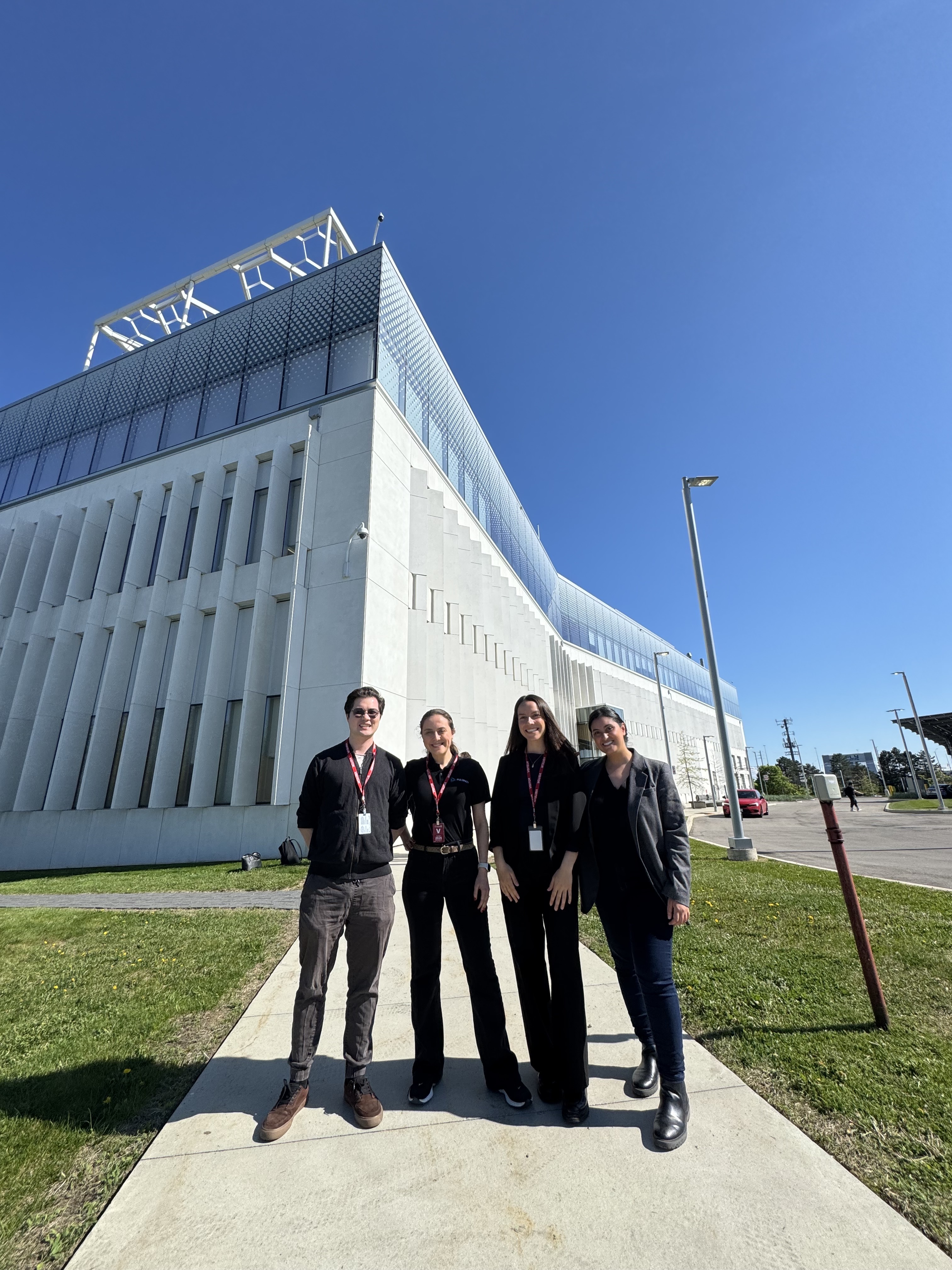
TORONTO, CANADA, March 30, 2026: Pulsenics, a Toronto-based developer of electrochemical diagnostic equipment, announced today it had entered into an agreement for a collaborative R&D project with the National Research Council (NRC) of Canada under its Critical Battery Materials Initiative (CBMI). Once developed, Pulsenics’ solution will be integrated into CBMI’s Battery Materials Acceleration Platform (BattMAP) as a proof of concept to establish the technological foundation for future deployment in industrial settings. CBMI’s BattMAP is a Self-Driving Lab – a revolutionary technology platform where Artificial Intelligence (AI) and robotics combine to accelerate cathode materials discovery.
Canada, endowed with rich nickel reserves, will benefit from one of CBMI’s strategic imperatives to optimize cathodes with high nickel content. Comprehensive spectroscopy data from Pulsenics’ Pulse Probe will support the Self-Driving Lab’s automated high-throughput experimentation as they pursue this strategic goal.
“CBMI aims to connect our country’s mineral and energy technology industries with automated, AI-enabled platforms that can discover new critical battery materials and critical mineral conversion processes faster than ever before,” said Zoya Sadighi, NRC’s principal investigator for the collaborative project. “Collaborating with Canadian companies allows us to support growth in the Canadian technology ecosystem on the cutting edge of the energy industry.”
Pulsenics’ solutions use electrochemical impedance spectroscopy (EIS) to non-invasively scan batteries that contain experimental cathode formulations. AI models use that data to predict lifetime performance, select the most promising formula, and direct robotic synthesis of the next novel chemistries. It is conceptually similar to the way that medical researchers use AI to develop proteins, molecules, or vaccines.
Pulsenics’ EIS technology should empower the NRC’s CBMI Self-Driving Lab to conduct in-line characterization of key battery properties for numerous new cathode formulations at a pace that matches BattMAP’s existing high-throughput synthesis. By eliminating characterization as a bottleneck, this integration should enable a seamless, end-to-end workflow – from synthesis to characterization – making a significant leap from the previous approach of testing each formulation individually and unlocking true high-throughput materials discovery.
“Automated laboratories like BattMAP are the future of industrial research,” said Pulsenics Co-Founder and COO Mariam Awara. “We’re proud to be a key enabler in helping CBMI realize its vision for the Self-Driving Lab and high-throughput experimentation. Together, we can find new battery chemistries that create jobs right here in Canada.”
About Pulsenics
Pulsenics leads the field of electrochemical performance diagnostics with groundbreaking hardware, real-time data hub and revolutionary Performance Cataloguer solution. Their novel electrochemical impedance spectroscopy (EIS) solution allows for rapid diagnostics at all volumes. High-throughput OEMs can depend on Pulsenics to forecast cell performance, identify mechanical defects and streamline manufacturing processes with real-time data analysis. Pulsenics is paving the way forward toward a more reliable and efficient electrochemical industry. Learn more at www.pulsenics.com
About CBMI
Hosted by the National Research Council of Canada's Clean Energy Innovation Research Centre, the Critical Battery Materials Initiative is establishing automated, AI-enabled platforms that can discover new critical battery materials and processes faster than ever before, contributing to the growth of a sustainable Canadian battery supply chain.