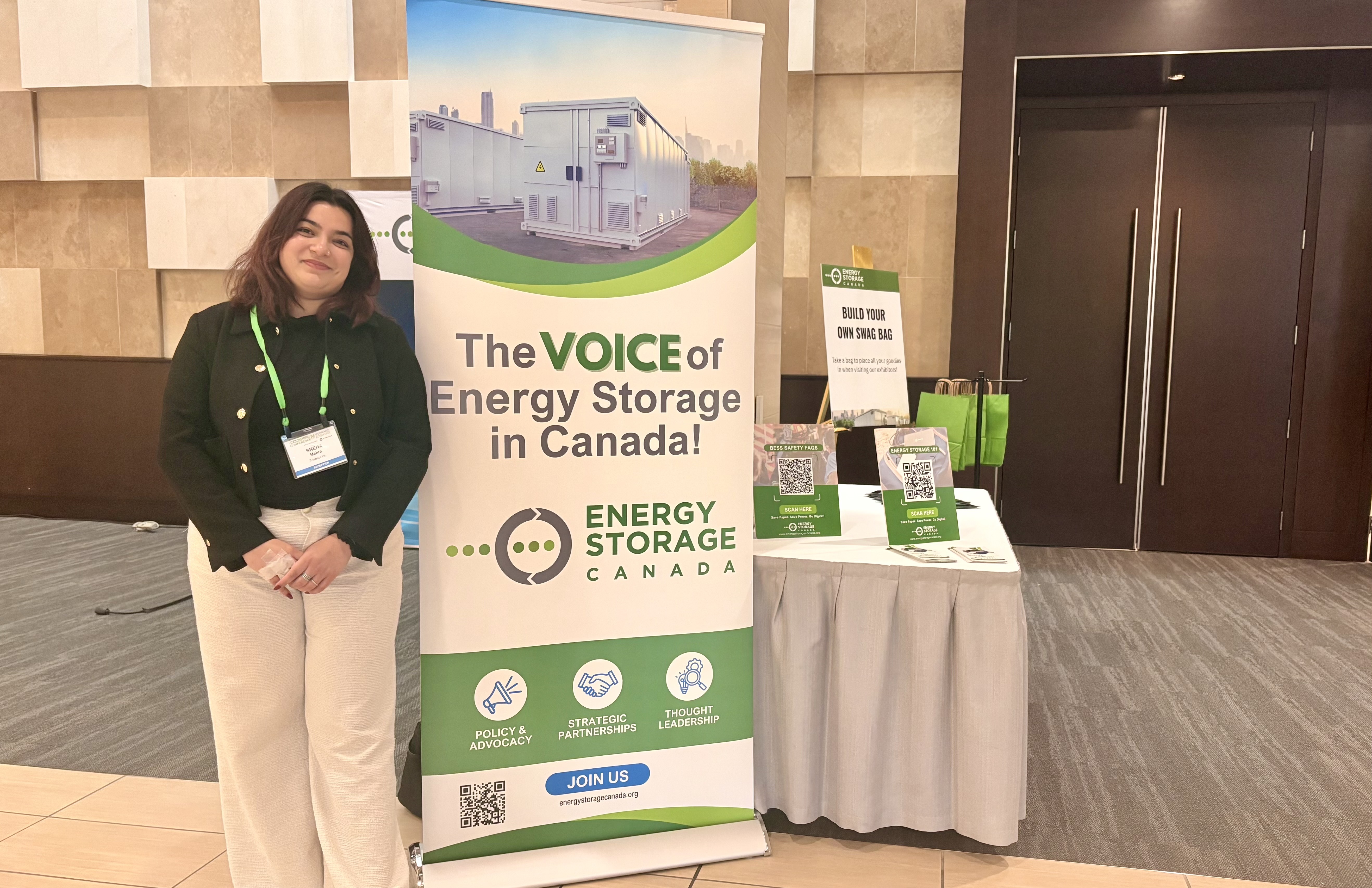
Pulsenics was pleased to attend Energy Storage Canada 2026, our country’s leading conference for the stationary storage sector. Battery energy storage systews (BESS) are set to grow from 552 MW at the end of 2024 to as much as 2.7 GW by the end of 2030, a conservative estimate based only on projects with regulatory approval in 2025. Pulsenics will help accelerate the growth of this critical industry during a period of rapid global growth in power demand.
What we heard: Foreign cells, local packs
Canadian BESS pack manufacturers, including those who split ownership between domestic and overseas subsidiaries, talked about purchasing their cells from abroad and integrating into packs locally. This tracks the general logic of the scale and maturity of the Chinese and Korean battery cell industries.
Unfortunately, this scenario means that Canadian pack integrators are not in control of their cells across the entire manufacturing process. Because minor issues in cells can lead to large warranty events, domestic organizations are unduly exposed to risk unless they perform comprehensive quality control on incoming cells.
As we’ve written previously, it is prohibitively expensive to test 100% of incoming cells with legacy technologies. Many packs integrators fall back on batch testing or simply hope that warranties will protect them from failure events. Pulsenics AccelaGrade addresses this gap by enabling fast, thorough, and economical grading of incoming cells.
What we heard: Ontario leads
Ontario has been making headlines for years as Canada’s leading province for energy storage installation. The Napanee BESS project, completed earlier this year, is a 250 MWh facility capable of powering a quarter million homes for four hours. Total capacity for the province is difficult to quantify but everyone we talked to agreed that Ontario was the radiating hot spot of Canadian growth.
Fortunately, this momentum is spilling over into other regions. Highlights include:
- Northland Power’s Jurassic BESS in Alberta.
- Canadian Solar’s e-STORAGE projects in Nova Scotia.
- Recurrent Energy’s Chasm BC solar plus storage in British Columbia.
As a proud product of Ontario’s innovation ecosystem, we’re thrilled to be at the epicenter of BESS deployment. As the industry scales nationwide, we’ll be there.
What we heard: Full lifecycle for lithium-ion
Unlike gasoline, batteries don’t evaporate into thin air when you use them. That’s good news for the atmosphere but bad news for the landfill. Canadian leaders are focused on ensuring that battery lifetime is maximized, and that materials are recycled, even if that means the battery needs to change hands a few times.
Pulsenics, with our unique line of AccelaGrade battery grading products, will be part of that world-leading value chain. As we wrote in a press release with Moment Energy back in April”
Moment Energy, the global leader in battery repurposing, and Pulsenics, a Toronto-based developer of diagnostic equipment, today announced a joint project to develop advanced quality control for end-of-life EV batteries. NGen is supporting the $5M project. The partnership will scale second-life battery solutions to address the 5.6 GWh demand fueled by the rapid growth of AI data centers and quantum computing
Moment Energy will develop industrial-scale workflows based on AccelaGrade, a new battery qualification solution. AccelaGrade, launched by Pulsenics earlier this year, is a scalable quality control solution for used batteries that cuts testing time by up to 90%. AccelaGrade integrates multiple testing methods into a single dataset that reports battery state-of-health (SoH) in less than 30 minutes.
Thanks to Energy Storage Canada for the invitation. We can’t wait to come back next year and see how far everyone has come.