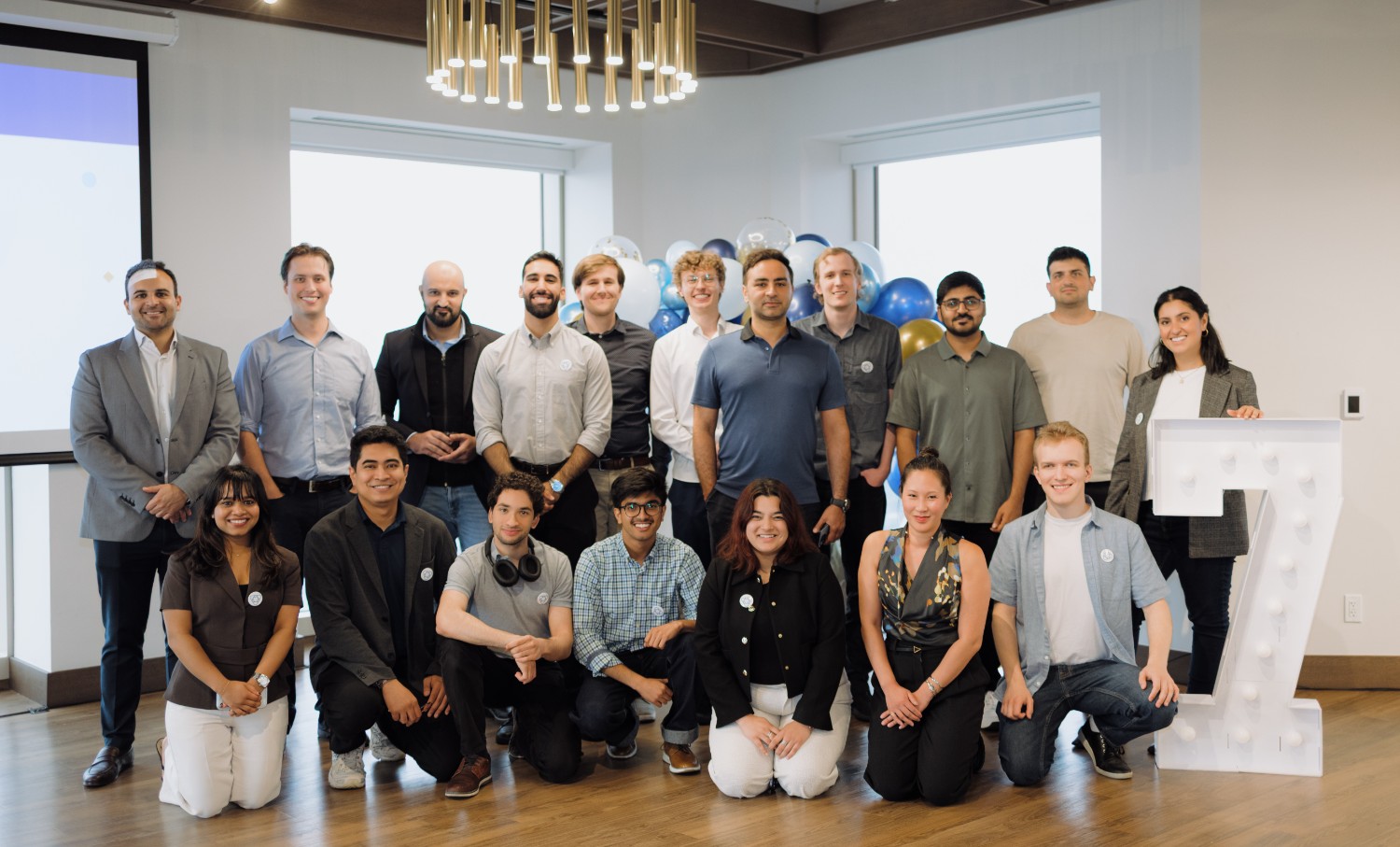
A letter from Pulsenics CEO and co-Founder Dr. Essam Elsahwi
As a student, I visited a First Nations community in northern Canada where the water was so contaminated that children could not drink it. I later learned of a particular technology that could have treated this water cleanly and off-grid: electrochemical water oxidation. Although promising, electrochemical water oxidation had a maddening property: at five litres it worked perfectly, at a thousand litres it failed, and there was no way to see inside the running system to understand such failure. That became the problem I could not walk away from.
.png)
The technology that could have helped that First Nations community did not fail because the chemistry was wrong, it failed because nobody could understand what went wrong at scale. Every founder and innovator I have met knows this conundrum: the space between what works on a bench and what survives at scale is where good technology goes to die.
My doctoral research at the University of Toronto was at the intersection of electronics and material physics. That turned out to be the toolkit this problem demanded. Seeing inside an electrochemical system is as much a measurement problem as it is a chemistry problem: you interrogate the system with electrical signals while it runs, and the response tells you how the electrodes, membranes and electrolytes inside are behaving. That was the bench. It was time to scale.
Seven years ago, Ben Maxwell, Mariam Awara, and I founded Pulsenics to close that space. The timing was not an accident. Renewable electricity was becoming the cheapest energy in history, and electrochemistry was moving to the centre of the global energy system: batteries, hydrogen, green steel, CO2 conversion. Entire industries were preparing to scale up machines that nobody could see inside.
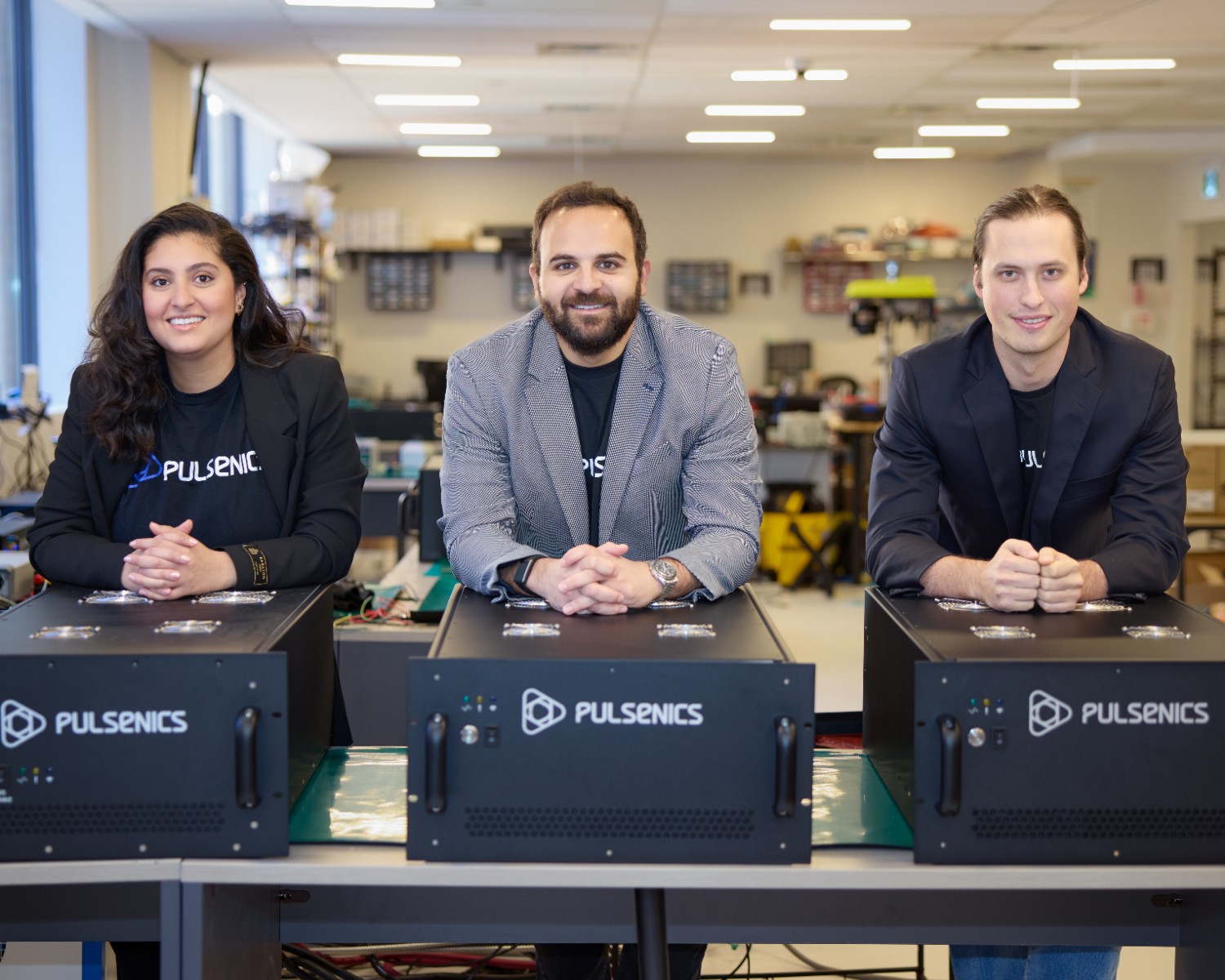
The market did not always agree that spectroscopy at industrial scale was even possible. The feedback arrived in the same shape almost every time. "Spectroscopy belongs on small cells, for materials research. Once you scale up, you can no longer use it." Or: "Nobody would know how to read the data coming off a full stack." We founded Pulsenics as a bet on the opposite view: as electrochemistry industrialized, measuring it in operation would stop being a research luxury and become a manufacturing and operational necessity.
I questioned that bet more times than I would like to admit. Looking back, very little of my doubt came from our technology or our customers. It came from the climate around us: an industry that moves in long cycles, an energy transition that surges and stalls, a political environment that keeps changing its mind about energy.
This doubt is the type that gets cast over an entire sector at once; it lands on everyone, and it blurs the path forward. Everyone building in this space has to remember the same thing: there is one way out of this transition, and it is through. We must keep pushing.
We did not win this bet alone. Our customers won alongside us, and their success is the clearest measure of ours.
Our first two customers came through what became the Pulsenics Demo Program, opening their facilities to the new company on the block. During three days on site, we pinpointed performance losses that had taken their electrochemists months to chase. Everything Pulsenics is today traces back to engineers like them, who trusted us enough to connect our instruments to the systems they were building. It still amazes me how much trust this industry has placed in us from the very beginning and how much deeper that trust has grown ever since. Trust doesn’t just open doors, it raises the bar.
Our first field unit monitored a water treatment reactor and a battery. What followed was a string of firsts: our first fuel cell, first electrolysis stack, first green steel reactor, first CO2 conversion system, first flow battery, and the list keeps growing. Each of those firsts meant learning a new technology from the inside. Because our products measure inside almost every kind of electrochemical system being scaled today, I have a vantage point I could not have built any other way: a view of where this entire industry actually stands, on almost every front.

Today, products we design and build run in over twenty-five countries, spread across five continents. Pulsenics measurements are now part of how the industry defines quality. We contribute to stack QA and QC standardization efforts. When I sit through conference presentations on stack spectroscopy now, most of the data on screen was collected using Pulsenics products. I smile at how quickly that changed. The pace at Pulsenics is as intense as ever, and moments like these are what make it all worth it.
.png)
What I did not anticipate, while obsessed with building and growing, was the responsibility that comes with impact. When an industry starts building its quality standards around your technology, there is no room for a bad day. Our customers stake their timelines, their capital and their reputations on numbers that come from our products. We earn that trust and raise that bar, again, every single day.
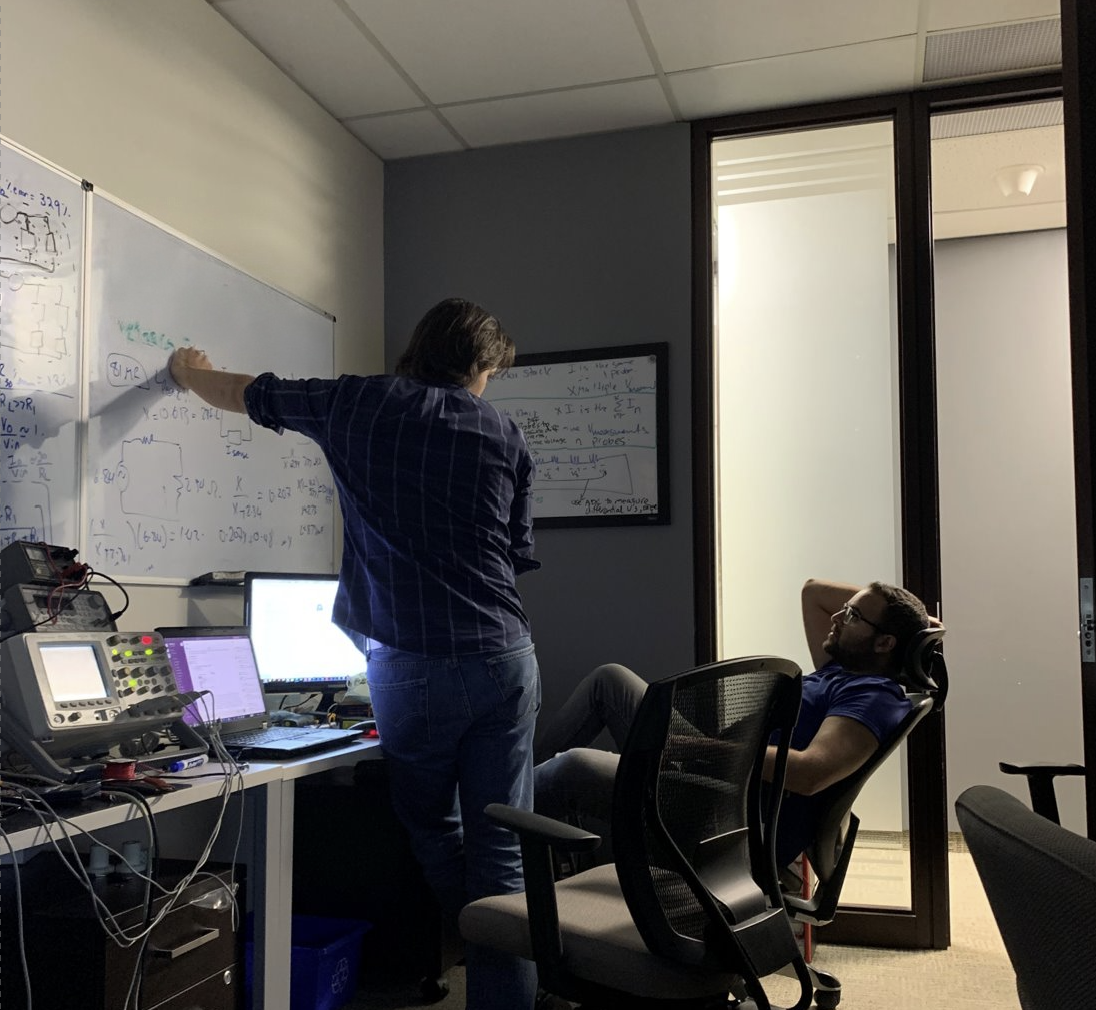
In 2019, Ben, Mariam and I wrote our mission on the whiteboard of a 150 square foot office: “Enabling Reliable Electrochemistry at Scale.” Seven years later, we became a multi-product company scaling our own production to match the pace of the battery and hydrogen industries, and the mission has not changed. Every stack we make visible, every factory we help scale, every reactor that finally works at a thousand litres, not just at five, because we could see inside it while it ran, closes a little more of the space where good technology used to die.
We are not done with firsts. In the coming months, Pulsenics will be taking a major new direction, and I could not be more excited about the future and what it holds for us. Whatever direction we take, the core stays exactly where it started: an exceptionally talented team, constantly closing the space, one first at a time.
To the customers who opened their doors, the partners who backed us before it was reasonable to do so, and to Team Pulsenics: thank you for seven years of firsts.
Sincerely,
Essam