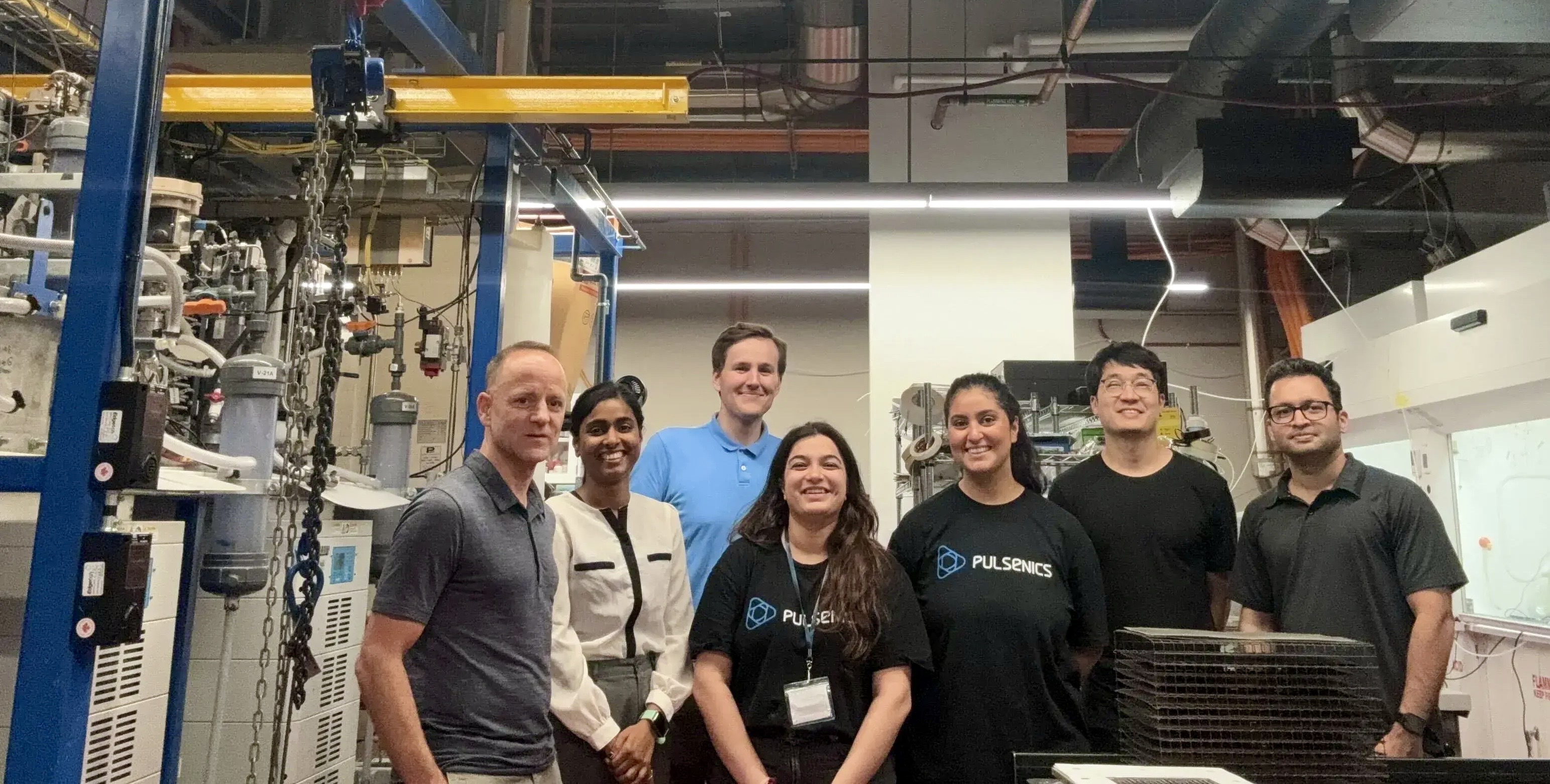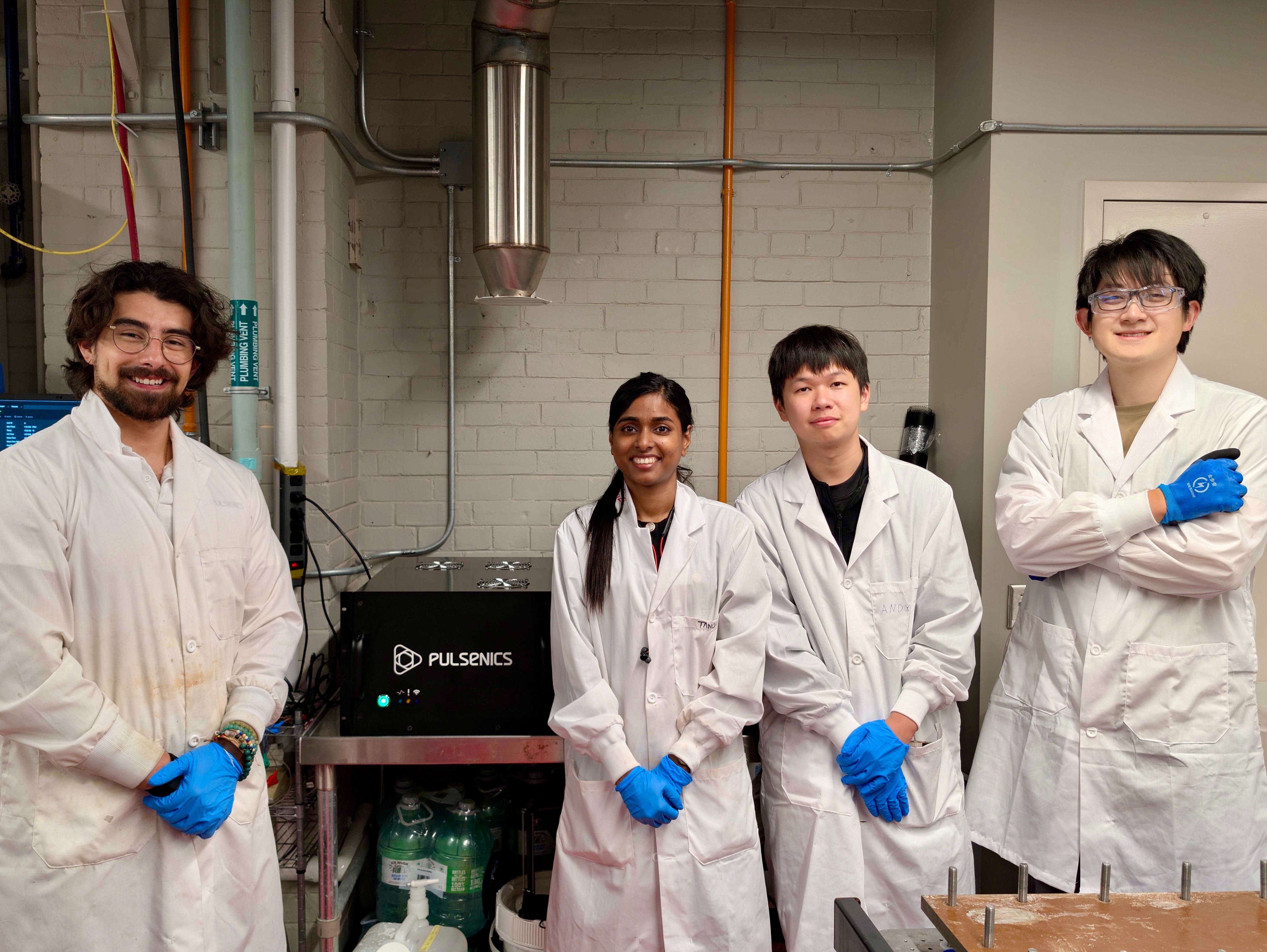
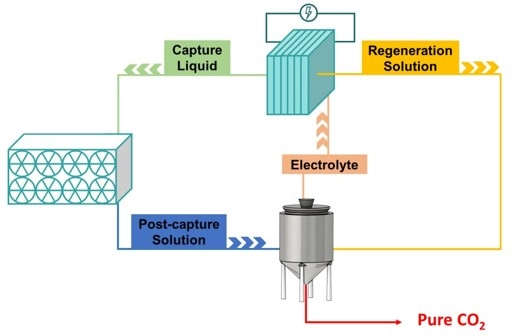
Today, many organizations are working to extract CO2 from the air with direct air capture (DAC) technology but those solutions can generate waste in the form of used filters or be extremely expensive. Researchers at the University of Toronto are scaling up a closed-loop system that uses electrochemical processes to un-bind CO2 from a capture liquid. This technology, which relies on mature supply chains in the fuel cell industry, uses electricity as its primary input and has the potential to change the conversation around carbon capture.
A team of University of Toronto researchers, going by the moniker E-quester, won a $250,000 prize from the XPRIZE carbon removal competition in 2021 to develop this technology. Today, the work continues under the auspices of NRCan and TotalEnergies.
“We’re looking to make direct air capture more affordable,” commented Tanushree Ghosh, postdoc researcher at the University of Toronto’s Mechanical Engineering Department. “And that means scaling our lab-proven tech up to industrially relevant size. That’s why we’re developing electrolyser cells with 800 square centimeters of active area, and studying how that large format integrates into stacks. Electrochemical diagnostics are key to this effort.”
Ghosh and her teammates identified ohmic resistance as a significant challenge during efforts to scale up their DAC cell from 50 to 800 square centimeters of active area. In order to diagnose the exact issue, they needed a diagnostic tool that could generate a Nyquist plot when exposed to 80 amps of current.
“Pulsenics Pulse Probes were the only solution we found that could handle 80 amps,” Ghosh continued. “Most tools max out at 5 amps, which wasn’t useful in our specific context.”
After several weeks of experiments, Ghosh’s team gained valuable insights into factors affecting the performance of the larger cell format, and shifted their focus.
“As we begin to look at optimizing for industrial-relevant stacks, rather than individual cells, we’ll continue using the Pulsenics EIS to help us make the correct material selections and mechanical adjustments,” added Ghosh. “Certain choices at the cell level don’t always translate to stack operations, and detailed diagnostics help us track that.”
Ghosh’s team aims to combine ten large-format cells into a single stack, creating a system with 8,000 cm² of total surface area. Future work will evaluate how such stack designs could be deployed at commercial scale.
Pulsenics co-Founder and COO, Mariam Awara, commented, “Carbon dioxide removal is on the frontier of industrial electrochemistry. We’re so proud to support the cutting-edge research team at the University of Toronto as they help Canada pursue our 2030 climate goals.”